White Egg Part Explained

Almost everyone who cracks eggs has had the same moment of hesitation. You open the shell expecting a familiar yolk and clear white, and instead notice a pale, rope-like strand attached to the yolk. It looks out of place, unexpected, and vaguely unsettling. For many people, that single detail is enough to spark concern or even prompt them to discard the egg entirely.

That reaction is rooted in misunderstanding. The white strand is called the chalaza, and it is a natural part of every egg. It is not a defect, a contaminant, or the result of industrial processing. The chalaza forms naturally as the egg develops inside the hen, and it serves a very specific purpose.

Inside the shell, the yolk must remain centered to prevent damage. The chalaza consists of twisted cords of thickened egg white that act like elastic anchors, holding the yolk in place. When the egg moves, these cords gently pull the yolk back toward the center, protecting its structure.

Despite common myths, the chalaza has nothing to do with fertilization or embryo development. It appears in both fertilized and unfertilized eggs and is purely structural. An embryo, if present, forms as a small disc on the yolk’s surface, not as a string.

The chalaza is often more visible in fresher eggs because the egg white is thicker and more cohesive. As eggs age, the white thins and the structure becomes harder to see. Ironically, the eggs people question most are often the freshest ones.

The chalaza is completely safe to eat and disappears when cooked. It’s simply protein, doing its job. What looks strange at first glance is actually a quiet sign that the egg is fresh, normal, and perfectly designed.


Related Posts

Her Husband Lied About Cheating Until He Revealed The Truth Five Years Later

“I’ve been seeing someone,” my husband, Daniel, told me nineteen days after my mother died. Sitting at our kitchen table, I asked how long it had been going on. “Long… CONTINUE READING

If You Find This Common Insect in Your Home, Here’s What You Should Know

Finding an unfamiliar insect inside your home can be surprising, but one insect does not automatically mean you have an infestation. Many insects occasionally enter houses while searching for food,… CONTINUE READING

Don’t get fooled by the supermarkets. They’re selling you meat from… See more

The bright red steak displayed in a supermarket may look especially fresh, but color alone cannot tell you whether meat is safe or of good quality. Before buying your next… CONTINUE READING

Caught Sleeping in the Middle of the Day: A Camera Clip Raises Questions About What Happens Behind Closed Doors

A security camera captured an unexpected midday scene inside a small family living space. Several people were sleeping together on a mattress surrounded by pillows, blankets, kitchen equipment, storage cabinets,… CONTINUE READING

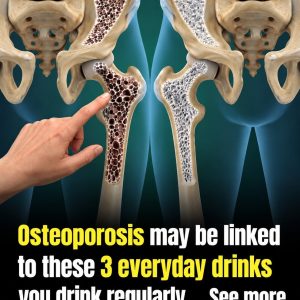
Osteoporosis may be linked to these 3 everyday drinks you drink regularly…. See more

Osteoporosis is a condition that weakens bones over time, often without noticeable symptoms until a fracture occurs. Although aging plays a major role, everyday habits, including what we drink, can… CONTINUE READING

Eating Peanuts Regularly? Here’s What Doctors Say Could Happen

Eating peanuts every day can provide several health benefits when consumed in moderation. Although technically legumes, peanuts contain protein, healthy fats, fiber, vitamins, and minerals that support important bodily functions…. CONTINUE READING