
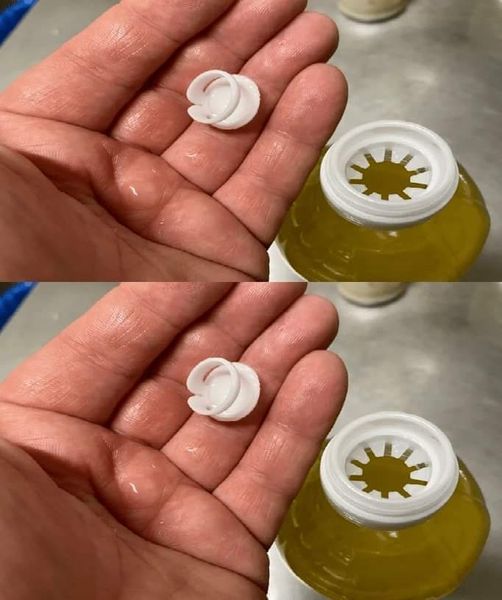
For years, I found the plastic cap inside oil bottles to be a nuisance. Removing it often required considerable effort, sometimes resulting in spills or even breaking the ring, making it challenging to access the oil. However, a colleague recently enlightened me about its actual purpose, and it has transformed my approach to using cooking oil.
The True Function of the Oil Bottle Cap
The plastic insert, commonly discarded, is designed to regulate the flow of oil, allowing for precise pouring. Here’s how to utilize it effectively:
-
- Remove and Reinsert Upside Down: After opening the bottle, take out the plastic cap and reinsert it upside down into the bottle’s neck.
- Secure the Cap: Press the inverted cap firmly until it fits snugly between the bottle’s grooves. Due to its asymmetrical design, this creates a small gap.
- Controlled Pouring: This gap acts as a spout, enabling the oil to pour in a thin, controlled stream, reducing the risk of over-pouring and minimizing spills.
Benefits of Using the Cap Correctly
-
- Precision: Achieve accurate measurements without the need for additional tools.
- Cleanliness: Prevent oil drips on the bottle and countertop, maintaining a tidy kitchen.
- Safety: Reduce the likelihood of slippery surfaces caused by oil spills.
Additional Tips for Managing Cooking Oil
Beyond utilizing the bottle cap, consider these practices to enhance your cooking experience:
-
- Use Oil Dispensers: Transfer oil into dispensers with spouts for even more control over pouring.
- Store Properly: Keep oil in a cool, dark place to maintain its quality and extend shelf life.
- Choose the Right Oil: Select oils suitable for your cooking methods to ensure optimal flavor and health benefits.
Understanding Different Types of Cooking Oils
Cooking oils vary in flavor, smoke point, and nutritional content. Here’s a brief overview:
-
- Olive Oil: Ideal for sautéing and dressings; rich in monounsaturated fats.
-
- Canola Oil: Versatile with a high smoke point; contains omega-3 fatty acids.
- Coconut Oil: Adds a subtle flavor; suitable for baking and medium-heat cooking.
- Avocado Oil: High smoke point; excellent for frying and grilling.
Environmental Considerations
Proper disposal of used cooking oil is crucial for environmental health. Avoid pouring it down the drain, as it can cause blockages and harm water systems. Instead:
-
- Reuse: Filter and store used oil for future cooking if it hasn’t degraded.
- Recycle: Many communities offer recycling programs for used cooking oil.
- Dispose Responsibly: If recycling isn’t an option, seal the oil in a container and dispose of it with your household waste.
Conclusion
The plastic cap inside oil bottles serves a valuable purpose in controlling the flow of oil. By reinserting it upside down, you can pour oil more precisely, keeping your kitchen cleaner and safer. Embracing this simple trick, along with mindful oil selection and disposal practices, can enhance your cooking experience and contribute to a more sustainable environment.