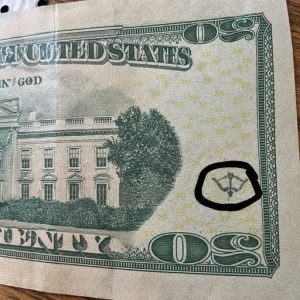
Have you ever noticed a U.S. dollar bill with small stamps or inked markings that seem unusual? While they may look mysterious, these marks often tell a story about where the bill has been. These markings are called chop marks, added by money changers, traders, or currency handlers to confirm that a bill was checked and accepted as genuine. Each mark reflects a stop in the bill’s journey through different hands and locations.
Chop marks are most commonly seen on U.S. dollars circulating outside the United States, especially in parts of Asia, Africa, and Latin America, where the dollar is widely used alongside local currencies.
The practice has historical roots. In China, merchants centuries ago stamped silver coins after verifying their weight and purity, creating trust in busy trade environments. As paper money replaced coins, this method was extended to banknotes.
For traders, chop marks serve practical purposes: they signal prior verification, reduce disputes, and help build trust where modern counterfeit-detection tools may be limited. The stamps are usually small and placed carefully so the bill remains usable.
Lightly marked bills generally remain valid currency, though heavily stamped ones may be rejected by banks or machines. Despite this, they still circulate in some regions, carrying the marks of multiple transactions.
Collectors often find chop-marked bills fascinating. Each mark is a visible reminder of the bill’s travels across borders, its role in global trade, and the human interactions it witnessed.
The size, style, and number of marks can also hint at the regions a bill passed through, making them valuable for those interested in economic history or numismatics.
Ultimately, chop marks are more than ink—they are a tangible record of the global journey of money. They connect modern currency to centuries-old practices and illustrate the fascinating paths a single bill can take.