
I’ve always kept a collection of padlocks at home, using them regularly at the gym, on my locker, and even in public bathhouses. They’ve been a simple but effective way to keep my belongings safe. But over time, I started noticing something odd—a tiny hole near the keyhole of each lock. I never gave it much thought until my daughter, with her boundless curiosity, pointed at it one day and asked, “What’s that hole for?”
Her question got me thinking. I had never really questioned it before, but now I needed to know. So, I did a little research, and what I found completely changed the way I see padlocks.
Most people own a padlock or two, whether it’s for securing a fence, a cabinet, or a locker. They’re everywhere in daily life, silently keeping our valuables safe. But beyond their obvious function, locks have some fascinating design elements that many people overlook. They’re not just about security—they’ve been engineered with small but crucial details that make them last longer and function more effectively.
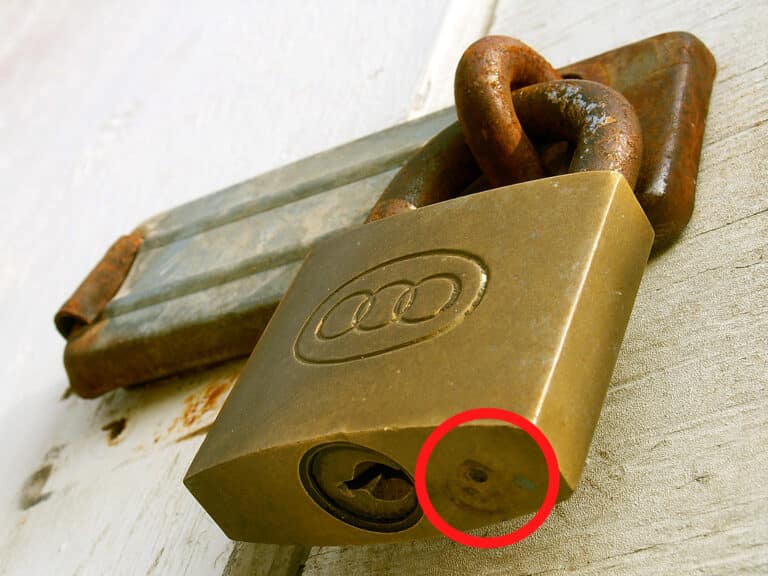
That small hole next to the keyhole is one of those details. It’s easy to ignore, but once you understand its purpose, you’ll never look at a lock the same way again.
Locks are often exposed to different weather conditions—especially when used outdoors. Whether it’s rain, humidity, or drastic temperature changes, these elements can take a toll on metal objects, causing rust and making the lock stiff or impossible to open. That’s where the tiny hole comes in.
It turns out that the hole isn’t just a random design choice; it serves as a built-in drainage system for the lock. When water seeps in—whether through the shackle holes or other small openings—it needs a way to escape. Otherwise, it would pool inside the lock, leading to corrosion, rust, and ultimately, a malfunctioning lock that won’t budge no matter how much you twist the key.
This small but essential feature ensures that water doesn’t get trapped inside, preventing rust from forming and keeping the lock in working condition. Without it, outdoor padlocks would degrade much faster, leaving users frustrated when they suddenly find themselves locked out of their own possessions.
But that’s not all—the hole has another handy purpose.
Not only does it allow water to drain out, but it also serves as a maintenance access point. If you’ve ever struggled with a stubborn lock that refuses to turn smoothly, you might have tried using oil or lubricant to loosen it up. This tiny hole provides the perfect spot to apply a few drops of oil, allowing it to reach the lock’s internal components. By lubricating the inner mechanisms, the oil reduces friction, prevents wear and tear, and protects against long-term damage from exposure to moisture.
It’s a small, almost invisible detail that makes a huge difference.
Now that I know this, I’ve started paying closer attention to my padlocks. Whenever I buy a new one, I make sure it has a drainage hole. And whenever my lock feels a little stiff, I remember that a few drops of oil through that tiny opening can make all the difference.
So the next time you see that little hole near the keyhole of your padlock, you’ll know it’s not just a random design quirk—it’s a thoughtful feature designed to keep your lock working smoothly for years to come.
Not many people know about this, so if you found this as fascinating as I did, share it with your friends and family. It’s amazing how such a small thing can make such a big impact!